
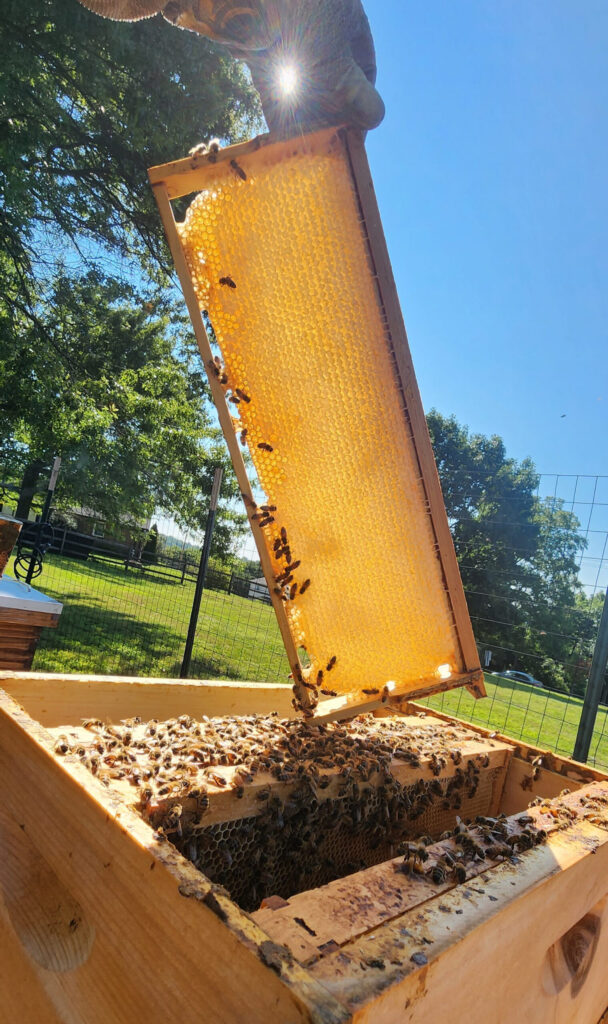
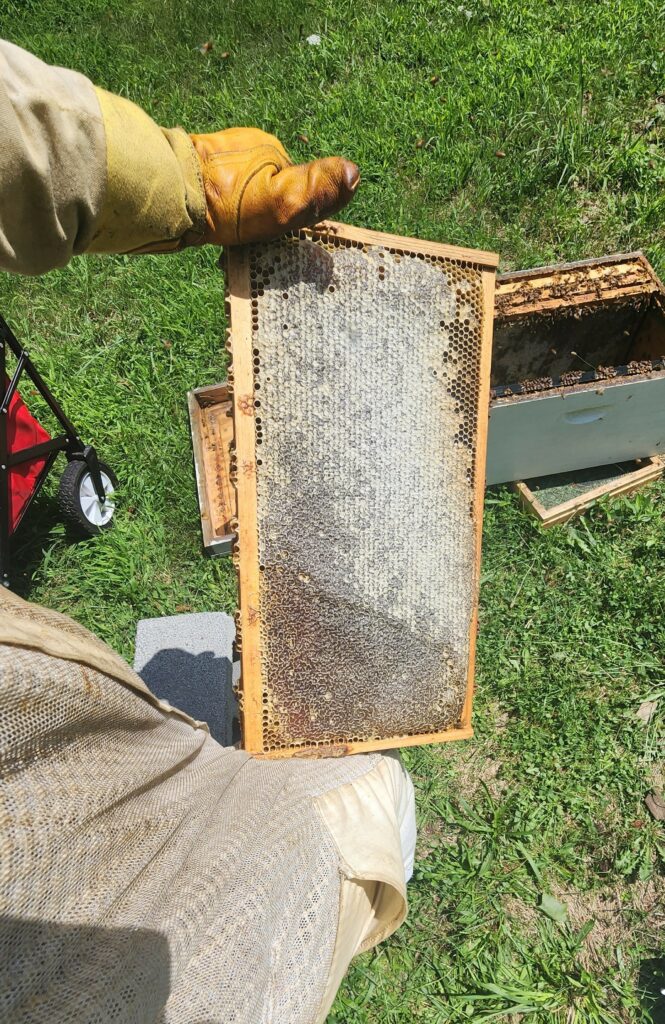
 The first frames of honeycomb are finally ready and will be available at the Downingtown Farmers Market this weekend, August 8th. The bees have taken their sweet time building the comb and capping off the honey in the frames, but I was finally able to pull the first two frames this past week. I like to let the bees do whatever they’re going to do and roll with their schedule, so sometimes honeycomb isn’t available early in the season. Building all that wax honeycomb can take a little while, even on a hive that is a pretty quick comb builder (they’re not all the same – each hive has its quirks!), so sometimes the honeycomb comes in a little later than usual. That plus a little vacation getaway means it’s ready now, and it’s always a delightful pairing for a cheese board or melted into a freshly grilled peach.
We’ve had a pretty phenomenal honey season so far, and we’ve already surpassed last year’s honey total at the beginning of July with August and September still left to go. There’s been a slow down in production which is typical for July, but there’s still a good bit of honey being made. Hope to see you at a market soon!
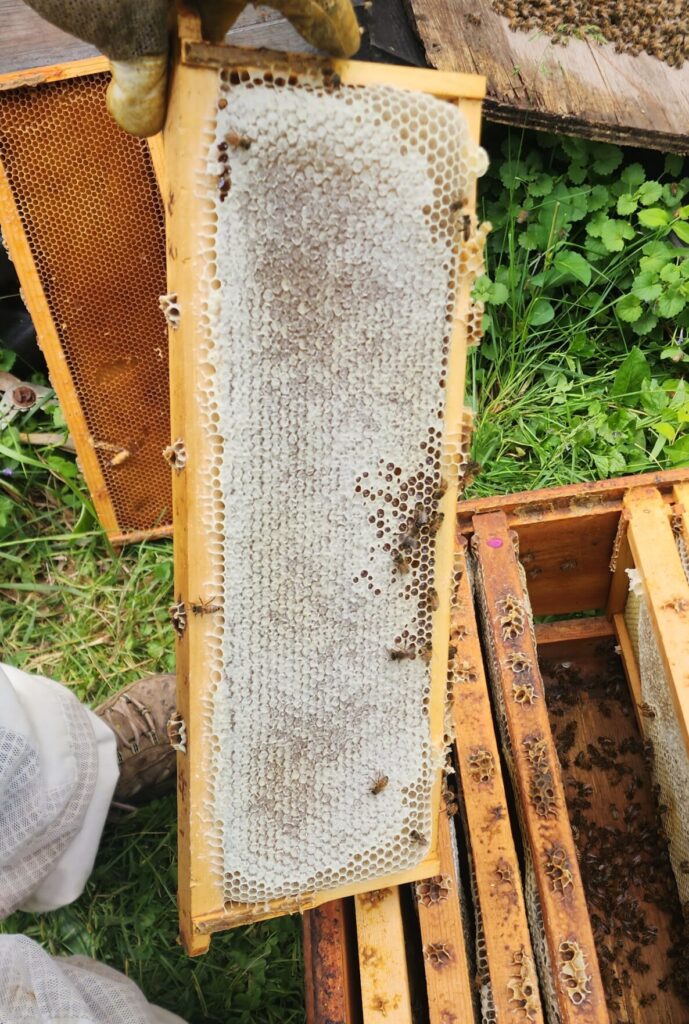

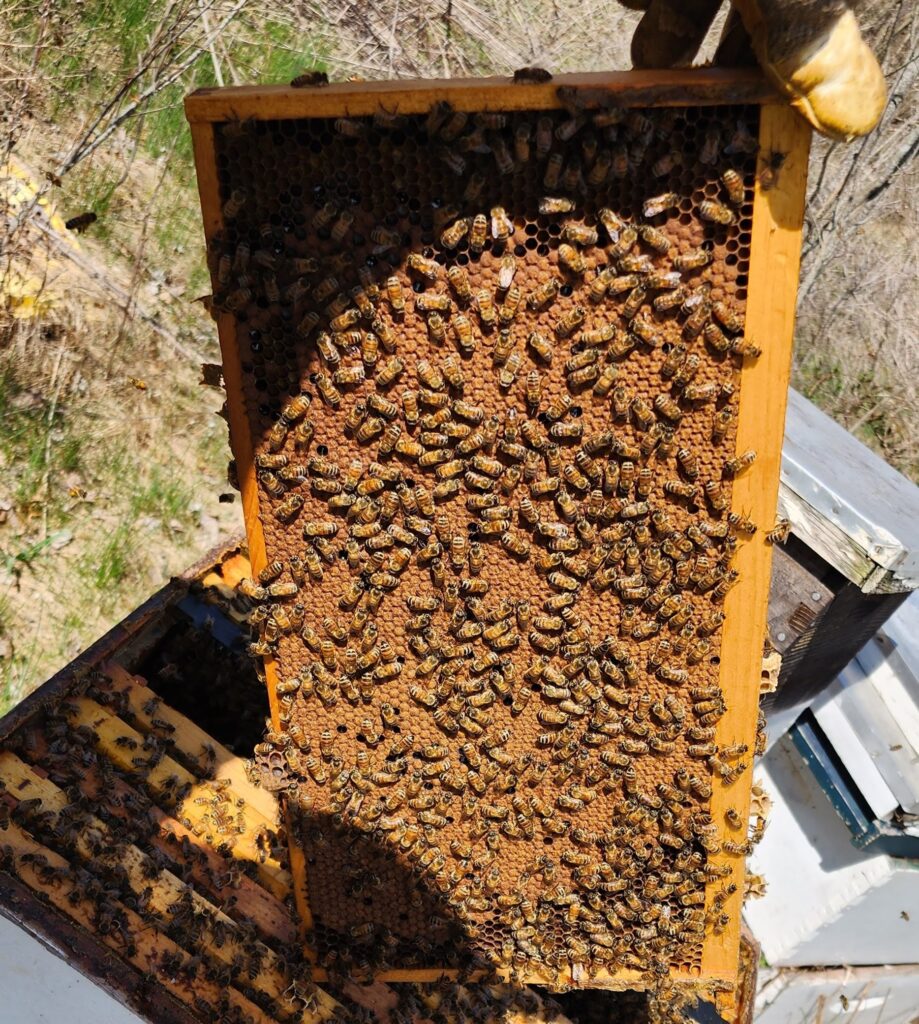
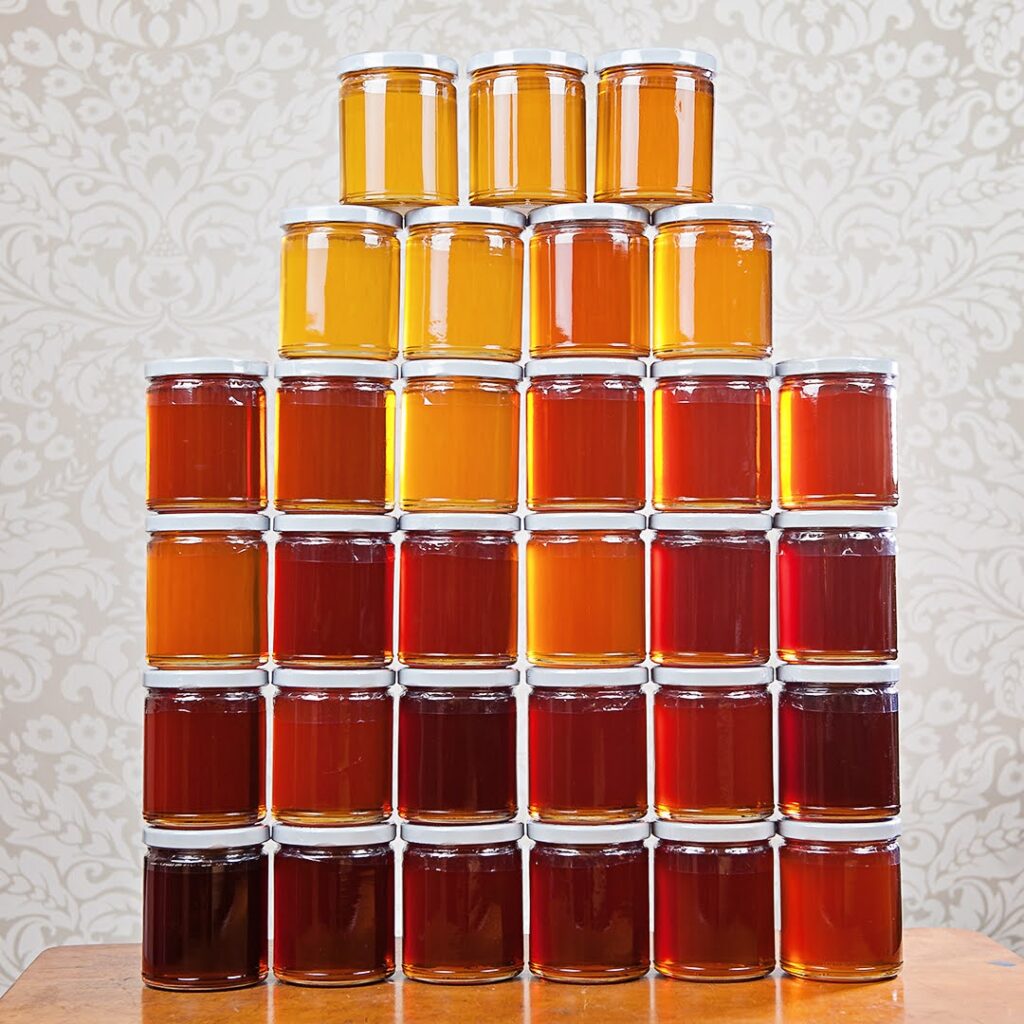
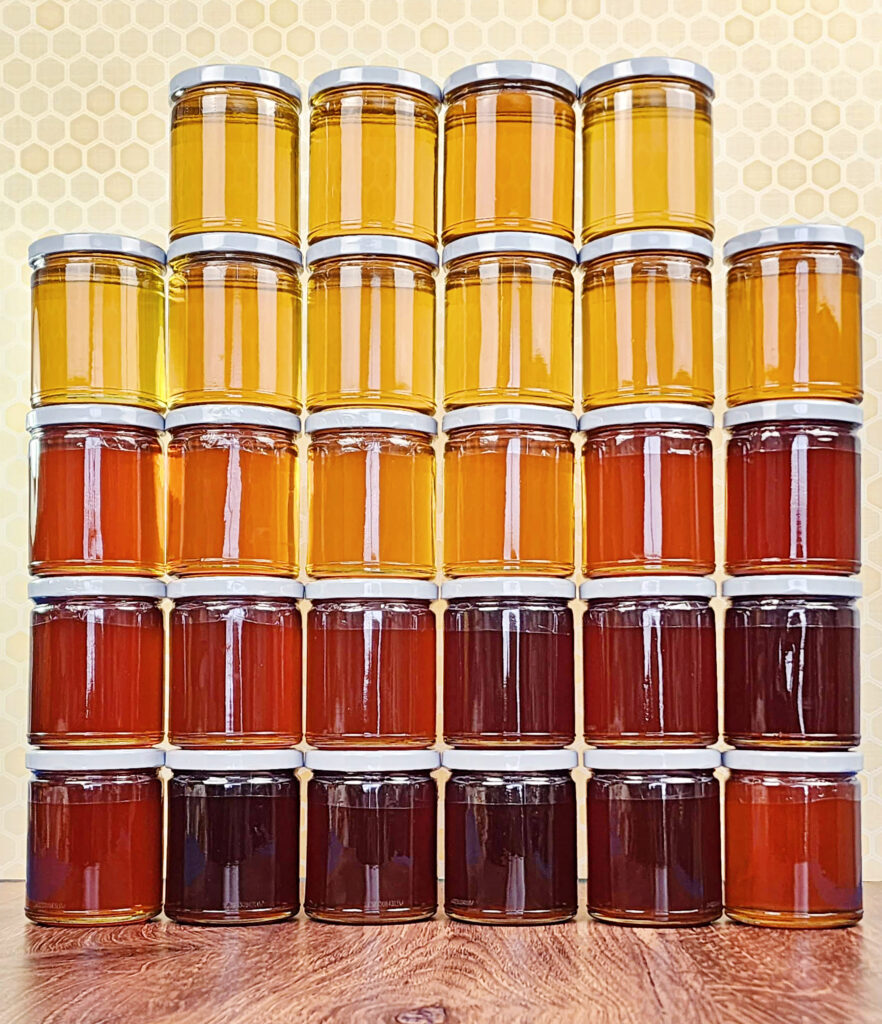


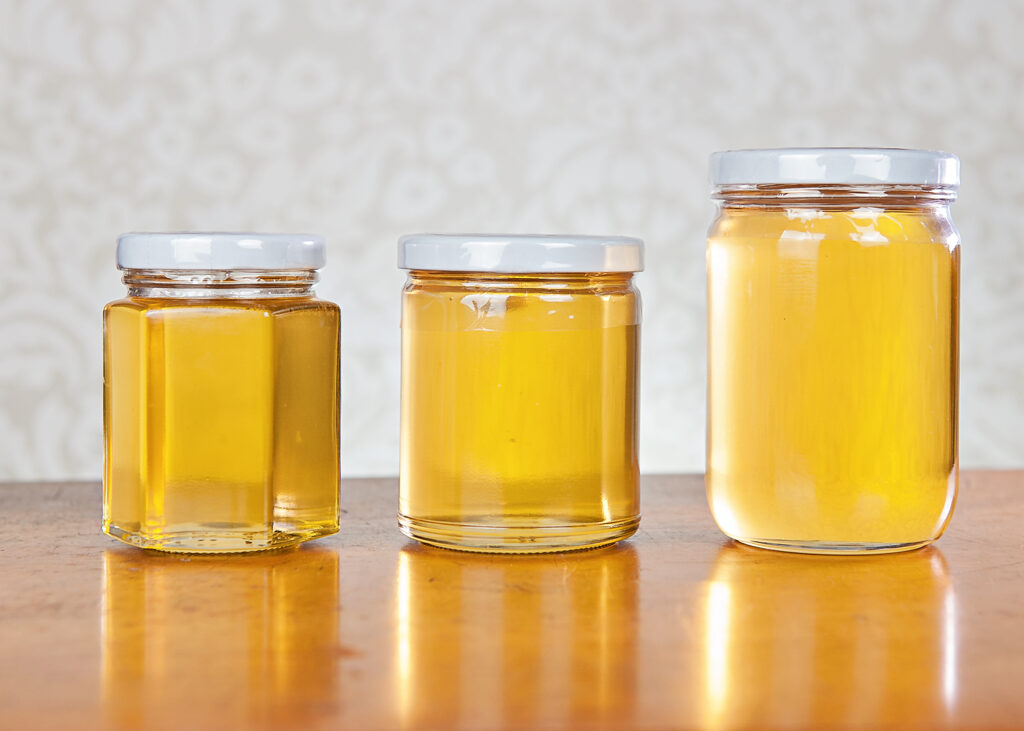 We’re already well into our honey season, working through batch letter H already. Our batches are separated by date and location, and through the early parts of the season, I’m pulling a batch of honey pretty much every week. Batches range between about 30-70+ pounds, and I enjoy seeing the differences between each batch as the season changes, and the small differences even between locations in the same week depending on what’s blooming and where. This season hasn’t been as stellar as last year since our black locust tree bloom was wiped out due to bad weather (cold and rain) and the trees outside my home didn’t even bother blooming this year at all. Black Locust trees are generally one of our biggest spring nectar producers, so that’s a huge disappointment. Now we’re into the middle of June and seeing a dramatic slowdown when clover nectar should be rolling in, but the forecast holds a week of 90 degree temperatures and we’ve had very little rain. The bees still seem to be pretty happy and healthy otherwise, but it feels like we’re into mid July instead of just halfway through June. Fingers crossed for a little more rain though – we could all use it!
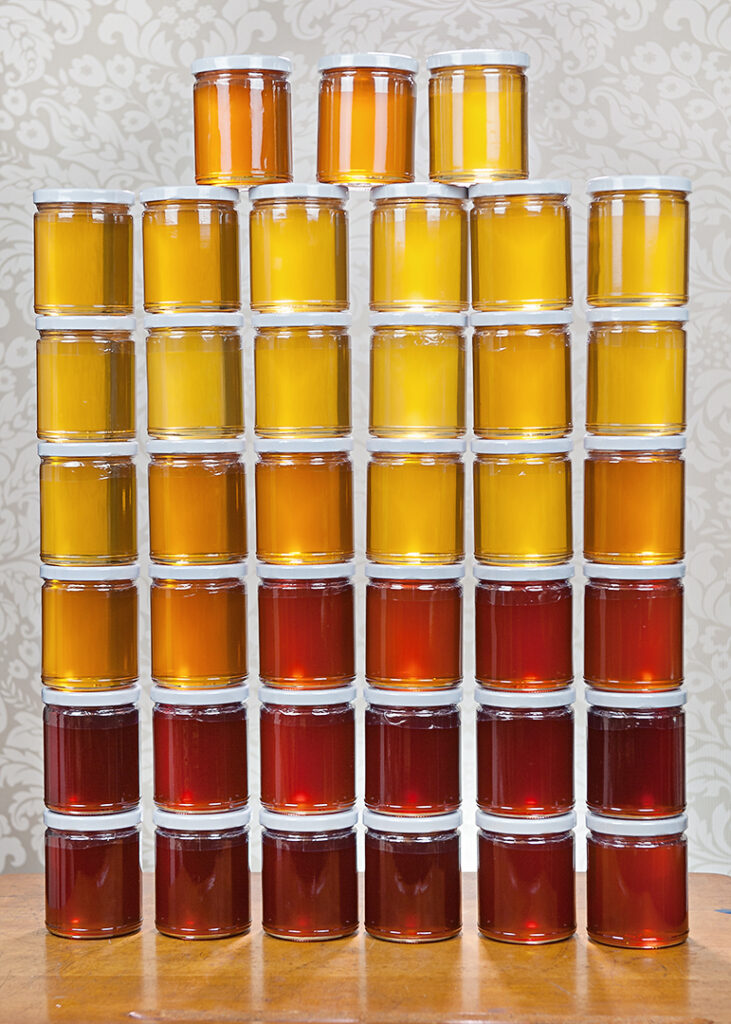 I did finally update all of last year’s honey guide which you can find